

Staying on the move in Israel and the Palestinian Territories through a month of trial. Second phase in Saturday’s mayham. Start here if you wish to see how we got there.
There’s a great place in Jerusalem for traditional Kurdish Kubbeh soup. It’s called “Between Gaza and Berlin,” a name derived from its location. The tiny eatery sits on the meeting of old Gaza road and Rabbi Berlin Street.
That name always seems to me like the coordinates of the Israeli state of being: We came from Berlin, we live near Gaza. We were killed in Berlin, we kill in Gaza. I thought that in going to Hebron with German Tine I will find that duality emphasized. Then I made my comment her about how as a German she must be familiar with the effect of media bias on public opinion, and her very accepting response made me feel much closer to Berlin. I know nothing of what Tine’s grandparents and great grandparents experienced through the war, but I know exactly what they watched on cinema newsreels. It is the resistance to such newsreels that currently defines my existence. It is in defiance of them, that I insist to come here and see for myself.
Now Tine is throwing Paris into the dish. “Why do they all have the Eiffel Tower on their rooftops?” she asks.
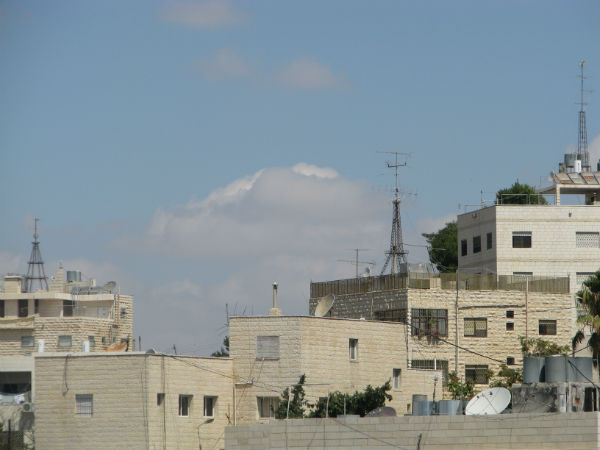
“This has been a popular design for TV antennae since I was a kid.” I tell her.
“Really, but why the Eiffel Tower?” she asks.
We need to get to know a local to find answers to tough questions such as this. One local approaches us in the middle of the Casbah. His name is Ibrahim and he is clearly a disaster zone tour guide. Ibrahim invites us to see the home of his friend, whose window were welded by the IDF so that his living room doesn’t look out over the settlement of Beit Hadassah. He also tells us that the settlers tried to sneak a cobra into the house through a hole in the wall. For all our difficulty with Hebron’s settlers and what we already know of their destructive tendencies, both Tine and I find that bit of information a bit questionable.
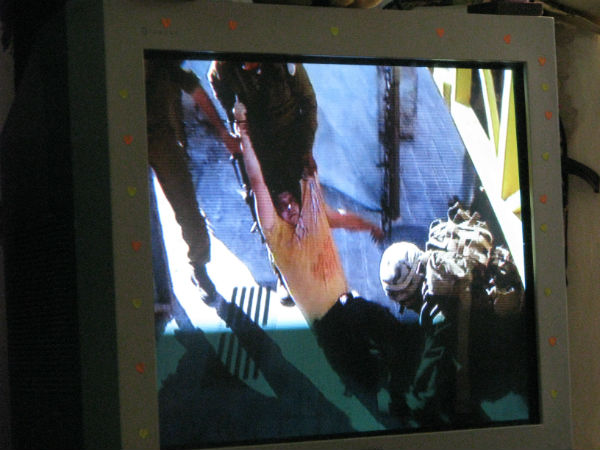
We watch footage of violent arrests on the family’s VCR.
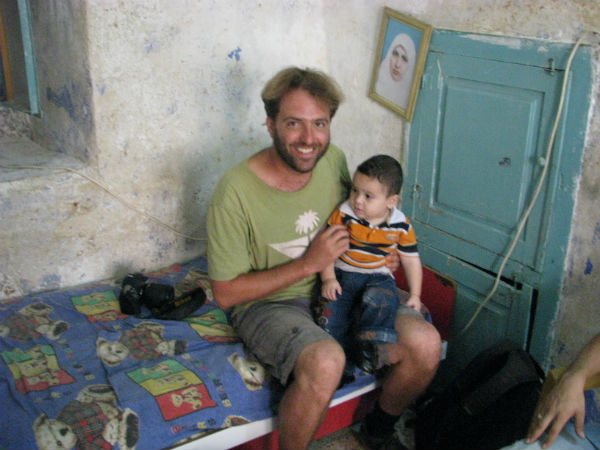
Then I get to hold the future of Palestine on my lap.
Now it’s time to ask the hard questions. What does Ibrahim expect after the UN vote on September 20th?
“There will be another intifada,” he says, then describes the chain of events he foresees and I suddenly realize that an “intifada” for him is an event triggered by the Israelis. “The Israelis will try to take over more turf,” he explains, “I know it because this morning the soldiers were in my house. They checked out the roof. I think they may want to put a watch tower up there.”
In a nearby coffee shop, the patrons don’t feel like discussing the future. God is on their mind. Bashar, an elementary school math and science teacher. Tries to interest us in reading the Koran. “People hear Islam and they think Osama Bin Laden, but they must look at the paople, not the terrible terrorists. Then they will understand that Islam is in fact a moderate religion, that is the middle of the way between Judaism and Christianity.”
The mention of Osama Bin Laden lights a virtual light bulb above my head. Tomorrow will be September 11th, 2011. We are not in fact situated between Gaza and Berlin. We are between New York and New York: New York of the disaster and New York of the UN vote. We bring up the issue with Bashar and his friends and hear of the pain they felt a decade ago and the fears that all Muslims will become vilefied.
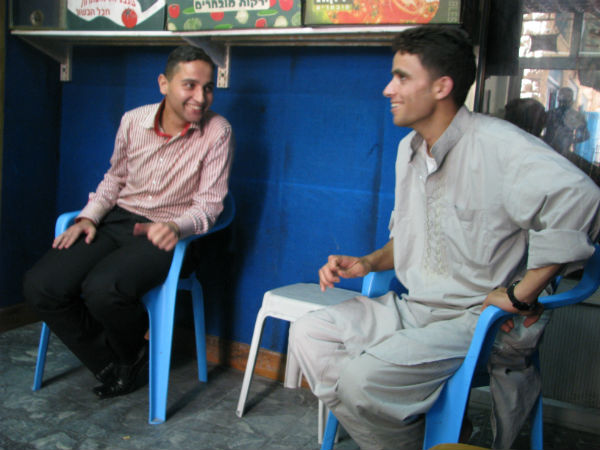
One of the friends, Wa’el, has a job at a grocery store in the settlement of Ma’aleh Beitar. We ask now him about his relationship with the patrons and clientele. “They are good people,” Wa’el says, “Very different from the settlers here in Hebron. Not all Israelis are like that.” Ibrahim gave a similar answer before when we asked him about his feelings for Israelis. I’m beginning to feel more comfortable and decide to step out of the national closet.
It’s taken well. Really well. Later, as we walk out towards Hebron’s main bus station Tine says she was nearly moved to tears on seeing how well I was received.
It’s time to head on. We randomly choose the town of Dura to the southwest and step into a “service” van. The young man sitting next to me, a student named Ali, tries chatting with us about football, then moves on to politics. I ask him about the vote. “It’s all good,” he said, “but the US will veto it, so what is it worth?”
“Are you bitter with Americans about this?” I ask.
“I’m bitter with the government, not the American people. I have no issue with the American people.”
Between Gaza and Berlin, between New York and New York, between Paris and Dura, this is what we find: people. It all narrows down to that: “Look at the people” Bashar said, and Wa’el noted that the settlers were “good people”. We are humans, why do we support systems that continuously deny that?
So be it. We’re in Dura.
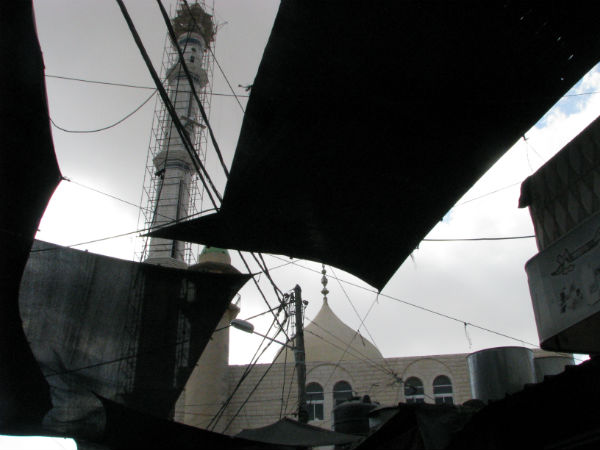
In the middle of town stands a fantastic mosque, its new minaret still under construction. A man waves at us from the top. Calls us to come up.
So we do.
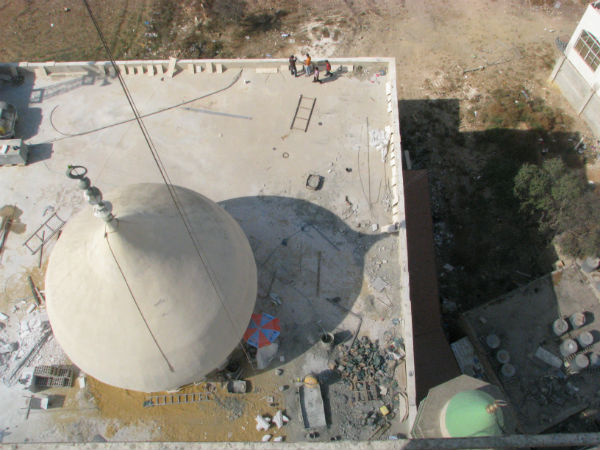
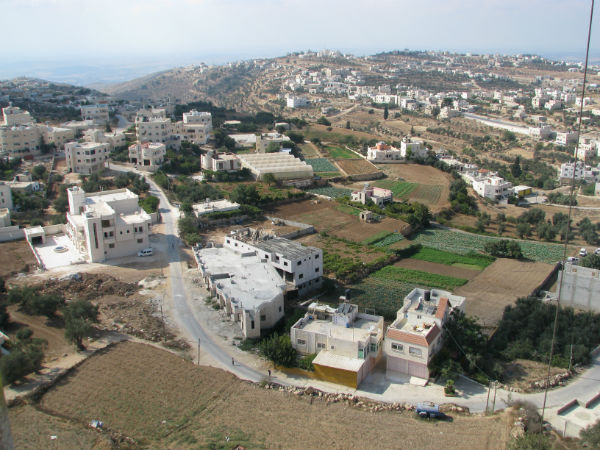
The view is insane. At good portion of the southern West Bank is visible from here.
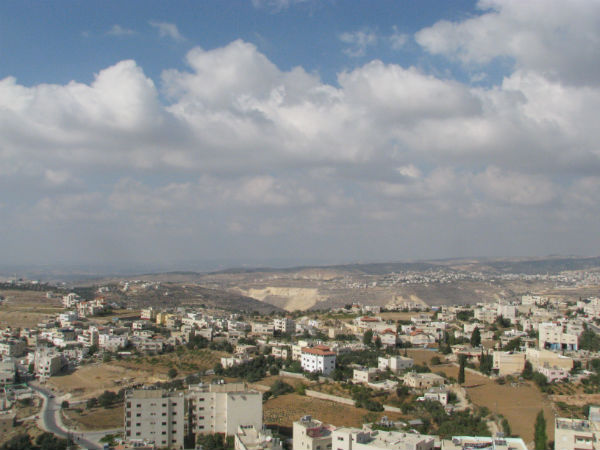
We can see traditional farming
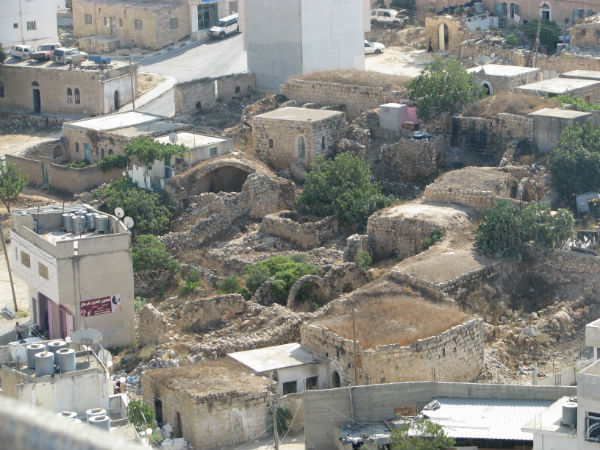
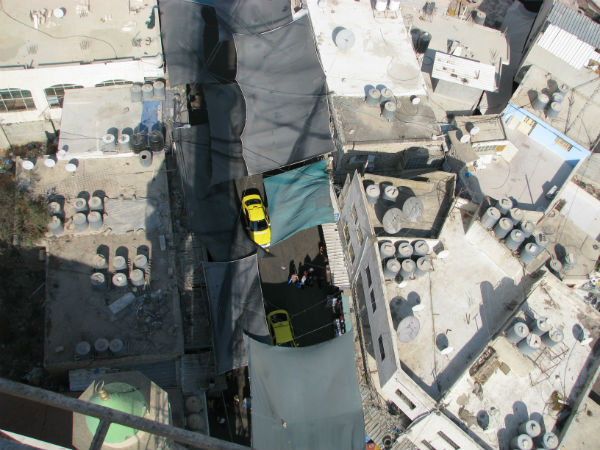
As well as the intricate rooftop-puzzle of Palestinian urbanscape.
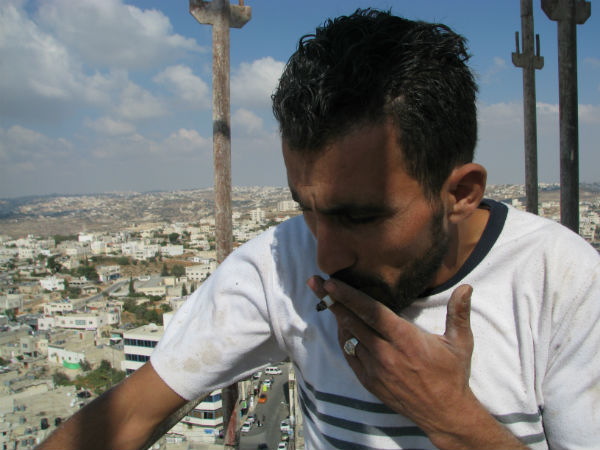
The man who invited us to climb is Ismail, the building lighting engineer. He, too, is worried that Israel will lose its wit following the UN vote, creating an offensive or using a minor event as excuse for one. However, Ismail is less concerned with pronounced violence than with the continual effect the Occupation has had on his society. “We have created a culture of occupation here,” he says. “This is what the kids learn to think about all the time, this is what drives people. This is unhealthy.”
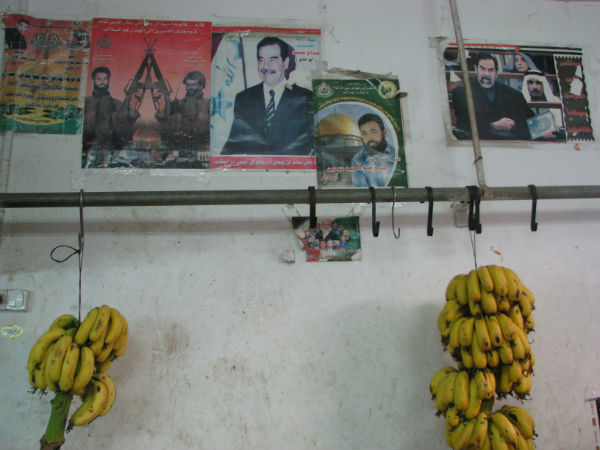
We, too, have had a bit too much. So were buying some fruit at a shop that has not one but two Saddam Husseins on its wall (please compare with Lukashenko portrait in part 8 of the journey), and head to the hills for a nature walk.
The kids follow us out of town, nagging the hell out of us. Dura doesn’t see much (or any) tourism. First we interact with them, then we become tired and just try to walk on. I tell Tine that soon we will get stoned. The alpha male kids never like other kids to see them being ignored. Indeed, the stones come. They are small and fly low.
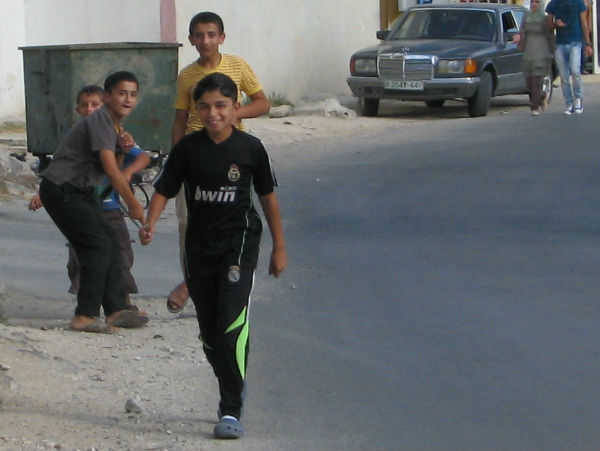
A man runs to us to let us know that the kids mean no harm: “They think by mistake that you are Isralis,” he says. We assure him that all is well and keep walking.
Outside of Dura, the landscape is splendid. “This place is so beautiful,” Tine says, “that if I were I Zionist I’d also want to occupy it.”
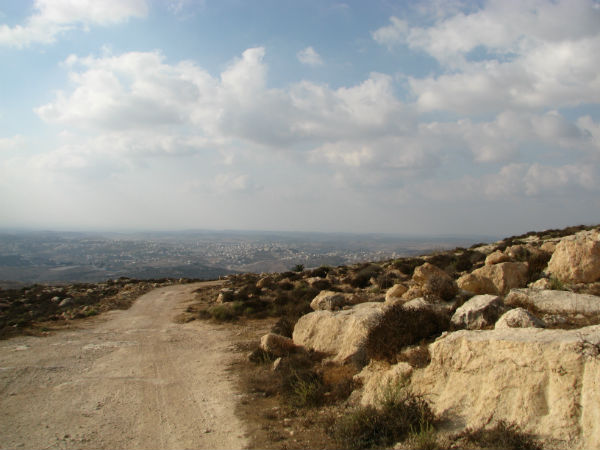
We beginning to descend the hills, at the bottom is Area B, where I am no longer ilegal, but just as we head down a smaller path, someone calls for us to stop. It is the police.
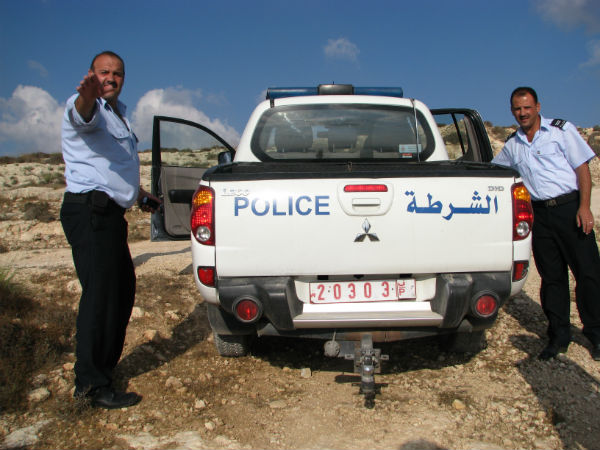
They ask for our documents and chat on the walky Talky for a long time. Somebody obviously called them and sent them after us. These are the days of “Price Tag” actions: Extremist settlers demolish mosques in villages in retaliation for political developments and other events that they find disagreeable. Maybe a family in one of the farmhouses along the road suspected us to be wrongdoers.
We aren’t wrongdoers, but one of us did break the law by standing on top of that hill. As promised in the title of this post, Tine and I are being arrested for loitering by the Palestinian authority’s police. This is the last photo I manage to take:
The following post will be entirely illustrated by the hand of Tine.
Click here for the first part of the day’s adventure.
Click here for the third and final part of the day’s adventure.
Click here for more of the september journey
Thanks for reading and taking part in the adventure. If any of you would like to pitch in for my travel and food, please do so using the “donate” button at the top of this page. Please be sure and specify that you are contributing to Yuval’s September Journey. I’m deeply grateful to those who already donated. Thank you so much! This trip would have been impossible if not for you.