

The debate regarding the cultural boycott of Israel is framed around the wrong questions
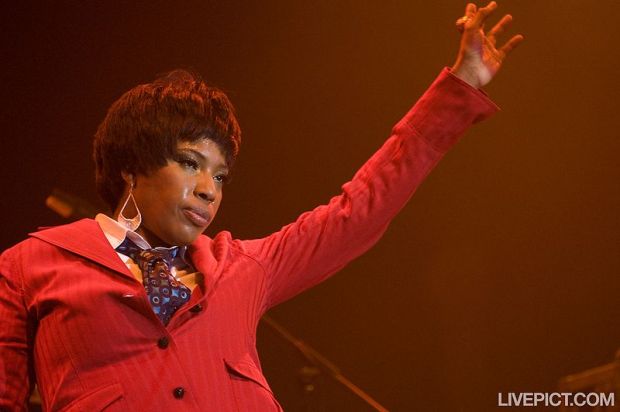
So Macy Gray decided to perform in Tel Aviv. After sharing her hesitation with her fans on Facebook, Gray apparently made up her mind not to cancel the gigs she planned to have in Israel. One of her tweets implies she was also turned off by some of the messages she got from the pro-Palestinian side. On Wednesday night, Gray posted a response to one of her followers: “@bahebakyagaza See I’m willing to listen – really listen – but some of you so called boycotters are just assholes.”
I guess some of the posts on Gray’s Facebook wall were indeed unpleasant, and too many were written in all-caps. For someone unfamiliar with the intensity of the Israeli-Palestinian debate, the language and tone on both sides can be shocking. But there is an issue here that goes deeper than style.
Many artists believe that music transcends political boundaries and everyday reality, so they are unwilling to submit their work even to political causes they believe in. Artists also tend to think that fans shouldn’t be punished for their governments’ actions, and some think that it’s not a good idea to mix politics and music. What’s more, most people were educated to believe that banning someone – anyone – is a bad thing, and they are inclined to think that this goes for states too. After all, the US and China commit atrocities as well, so if we ban Israel, why not ban them?
I don’t dismiss these arguments (I tried to deal with some of them here), but I do see a problem in the fact that they focus entirely on the Israeli side. In other words, they deal with one question only: Whether Israelis deserve to be boycotted. Some say they do, others say they don’t, or argue that in such a case everyone could be boycotted; still others claim that even if you could justify the boycott, it would be a counter-productive act that would only push Israelis further to the right.
But instead of discussing Israelis, I want to speak about Palestinians. After all, the main problem about the occupation is not the privileges of Israelis, but the way it affects Palestinians; and so the political action in confronting the occupation is not about hurting Jews, but rather about helping Palestinians get their rights.
The same goes for the boycott issue: It’s not the fact that Israelis want to go to a music concert that should bother people, but rather that Palestinians can’t attend the same shows. Even though they live under Israeli rule and on the same territory, the Palestinians are locked in their towns and villages, unable to travel or to have anyone visit them without a special permit from Israel. The inability to come to the concert is a symbol of the bigger problem.
So, instead of engaging in the endless debate on whether Israelis are evil enough to have them punished by canceling a music gig – something most artists feel uncomfortable with – I offer a simple test: When booking a show in Tel Aviv, the artist should ask that some of the tickets, say 25 percent, would be sold exclusively to Palestinians and that all ticket holders would be admitted to the concert (naturally, there would need to be some adequate security measures, but if that’s what will help Israel fight the threat of the BDS, I am sure it could be arranged).
If the Israeli organizers of the show refuse or if they are unable to deliver – it will become much harder for them to claim that there is no political problem with the gig, or that Israel’s treatment of the Palestinians shouldn’t be compared to Apartheid. And if they deliver, the artist gets to play a real part in bringing down the walls between Jews and Arabs. In any case, everyone would know where they stand.
I know this idea must seem crazy to some Israelis. Selling tickets to Macy Gray in Ramallah? But didn’t we just say music transcends borders and walls? If so, let’s put this notion to a real test.



January 22, 2011
9:27 am
Why not just schedule a separate show in Ramallah? Presumably with similar guarantees of ‘free access’. Surely that would be more convenient for most West bank residents. Or would the logistics of that be even worse?
January 22, 2011
9:42 am
“instead of engaging in the endless debate on whether Israelis are evil enough to have them punished by canceling a music gig”
That’s unfair, Noam. The point of BDS isn’t to debate the wickedness of Israelis. It’s to bring attention to the crimes that are committed by Israel against the Palestinian people. You can disagree with that, as is your right, but it’s not fair to mischaracterize the motivations of anyone in that movement.
January 22, 2011
9:49 am
Zvi – because “separate but equal” is a form of Apartheid.
Sinjin – I wasn’t saying that this is the aim of the BDS, but only that this is the shape these arguments sometimes take. check out the one on Macy Gray’s Facebook page for example.
January 22, 2011
10:00 am
Noam, I would love it if one concert in the region would be sufficient! But our route to ‘brotherly love’ probably needs to pass through ‘separate but equal’.
January 22, 2011
10:49 am
………………………………………….it’s an interesting idea Noam, but I think it defeats the purpose of the boycott, which should attempt to isolate, marginalize and cut off the Israelis from the rest of the world. That means no international academics, no book tours, no theater, no music, no conferences. Israel must be treated as a pariah state until the Occupation ends. Allowing a few Palestinians to hear Macy Gray is not good enough.
January 22, 2011
2:10 pm
Let us remember the context here. The call for BDS is a massive call endorsed by a vast majority of Palestinian organizations (political, civil society, unions, communities…). They are not interested in artists to throw then a bone (like Leonard Cohen offered to perform in Ramallah and was rejected). Their need for freedom is more urgent than their need to hear Macy Gray.
On the other side is a racist colonial state, whose population invites artists to perform for their leisure and also in order to feel “normal” and “part of the civilized world.”
Every artist must make a choice – to listen to the oppressor or to the oppressed.
January 22, 2011
4:45 pm
she made a completely illogical argument saying that the israeli GOVT. is disgusting but why should she punish her fans?
Those fans voted for that GOVT.
Govts. don’t grow on trees.
that’s just plain stupid macy…
January 22, 2011
11:34 pm
1. “Israelis” aren’t being boycotted, Israeli institutions are being boycotted
2. Palestinians living inside of Israel can go to the concert, but since they don’t have equal rights (which this author makes no mention of), Israeli institutions would still be boycotted.
3. The author makes a point to “reframe the argument,” but many on twitter/facebook have pointed to the fact that Palestinians from West Bank and Gaza can’t go to the concert, never mind leave for medical emergencies.
4. The whole article is ’67 focused.
5. This isn’t about, “hey Palestinians want to come to the concert too.” Artists not whitewashing apartheid is part of a larger strategy that goes back to the formation of the call, to put international pressure on Israel until three simple criteria are met: 1. End the occupation of all Arab lands. 2. Equality for all Palestinians living in Israel. 3. Right of return for refugees or compensation for those who decide not to return.
6. If it was about “bringing Arabs & Jews together,” he could have less offensively suggested that the concert be held in the West Bank or Gaza, and socially conscious Israelis could attend against the will of the Israeli government, like they would a wall demo.
7. The irony is that most of the article is Israel focused, yet the author talks about how it should be about Palestinian oppression. Toward the end it got more and more into how Israel can fend off BDS, “but if that’s what will help Israel fight the threat of the BDS.”
January 23, 2011
12:10 am
I actually find that Israeli response to boycott is better than expected. In addition to the counter argument borrowed from Israel’s ally Apartheid South Africa that try to deflect the critique of ISrael there is another significant response. A growing number of Israelis who are not buying the excuses. Even those who do not support the boycott realize that it is their government that is responsible for it. In that sense the boycott is having the exact effect intended.
January 23, 2011
1:22 am
I agree, Kobi. BDS is effective.
January 24, 2011
1:31 am
I hear in this article that Noam’s suggestion comes from a place of hope for progress in the right direction. But the primary reason that this solution is inadequate, albeit creative, is not only because it cannot ensure that Israel’s oppressive policies inside the green line and in the OPT are not whitewashed, as others have explained above, but also because it repeats the skewed Israeli framing of this conflict yet again.
In other words, it suggests that such a meager gesture (as Shir said “throwing them a bone”) will satisfy Palestinians and paint Israelis as generous and reasonable — and render BDS and Palestinian rights activism extreme. And when Palestinians will complain (again) that their rights have not been realized, Israelis can once again tell the world “see? We give and we give and they always want more!”
Additionally, I have to address the point about “singling out” Israel and not boycotting the US, China, etc. — an issue that (rightfully) comes up a lot in this debate. The Palestinians have called for international solidarity with this nonviolent strategy to free themselves of oppression. If another oppressed group in another country will call on the world to boycott it, most of the same folks will join that campaign as well. In fact recently Dave Randall from Faithless said it best, in a post to Macy Gray: “1. The oppressed people in the occupied territories have asked us to boycott. 2. It will make a difference in a way that boycotting the US simply wouldn’t.”
January 24, 2011
12:41 pm
This is how Dusty Springfield became the first white European artist to boycott South Africa. http://www.youtube.com/watch?v=CIarfaQY_LM
January 25, 2011
7:45 am
@blightuntonations
You are a racist and know nothing about the reality and beauty of israeli society. What you wrote about the “import” of culture to Israel outs you as somebody who knows NOTHING about Jewish culture. But it is good to see you here because it is people like you who lead bds. And the fact that nobody in this thread comments on comments like his says it all about these forums.
It is a disgrace. Humanity my arse!
January 25, 2011
3:21 pm
This step taken by Macy Gray is appreciated and respected from the Palestinian point of view. But i would like to make one correction in this article. The Palestinian Israeli fight since 63 years is based on land theft, injustice and inequality. Our problem was never between “Palestinians and Jews as mentioned in the article”. Our problem is between Palestinians (Christians, Muslims and Jews – there are few Palestinian Jews in North Nablus in WB- ) and between the Zionists.
One more thing to point out, Macy Gray suggested that 25% of the tickets go exclusively to the Palestinians, but we are ignoring a huge issue, that millions of Palestinians in WB cannot get permission to the Israeli side! And from this point, i would like to suggest that Macy Gray should do a concert in Ramallah for the Palestinians, to show that she is asking for peace, justice and equality for both sides of the conflict.
January 26, 2011
11:00 am
[...] my proposal for artists playing in Israel to insist on Palestinian attendance at their gigs, one of the reader posted this video clip, showing Dusty Springfield’s 1964 refusal to [...]
February 6, 2011
12:17 pm
[...] colleague and peer, Noam Shiezaf, published a thoughtful piece on this site arguing that Macy Gray should request that a certain number of tickets be sold to [...]