
Photos by Mareike Lauken and Keren Manor
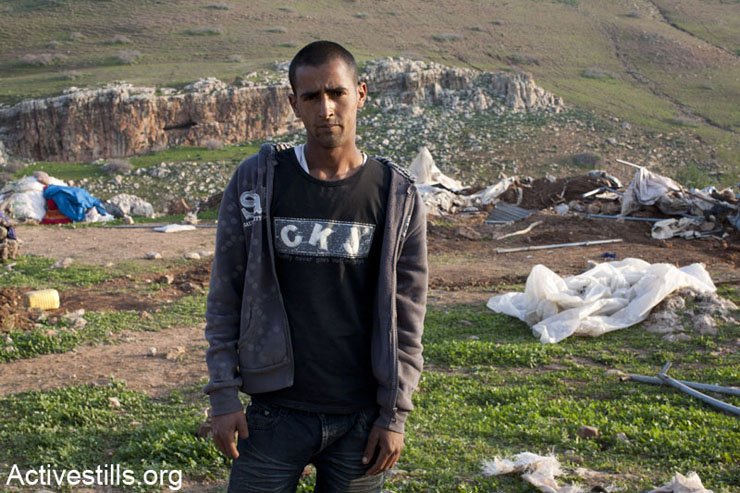
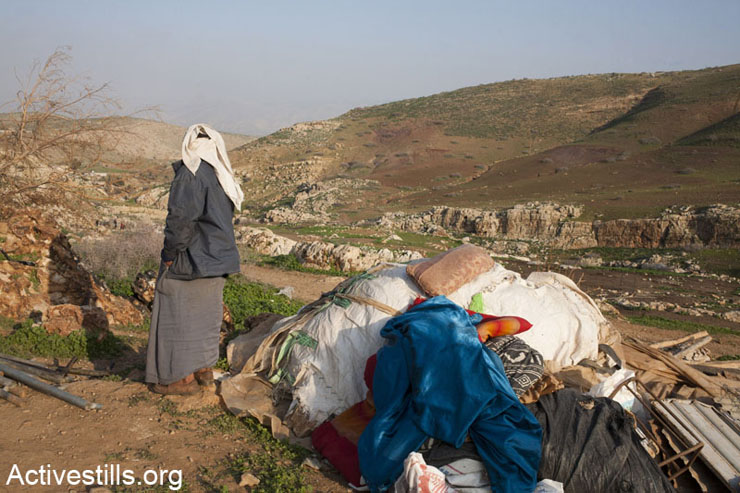
Ahmad Sariya stands in front of his demolished house in the village of Al-Mayta. In 2012, Ahmad lost four fingers from his right hand to unexploded ordinance left by the Israeli army in the fields next to his house.
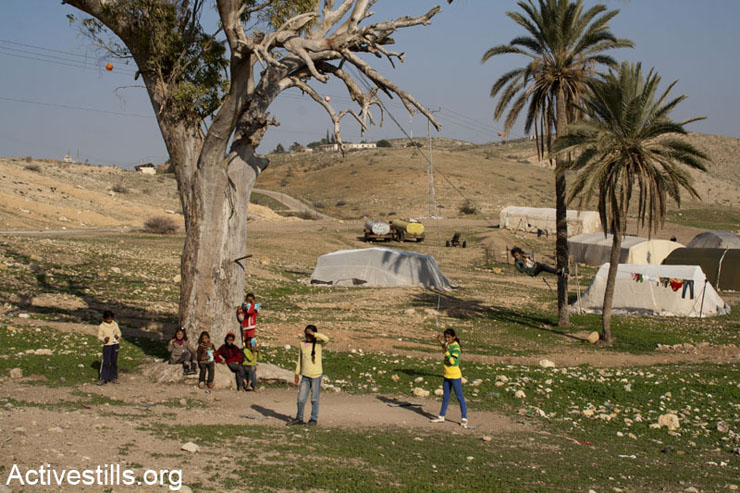
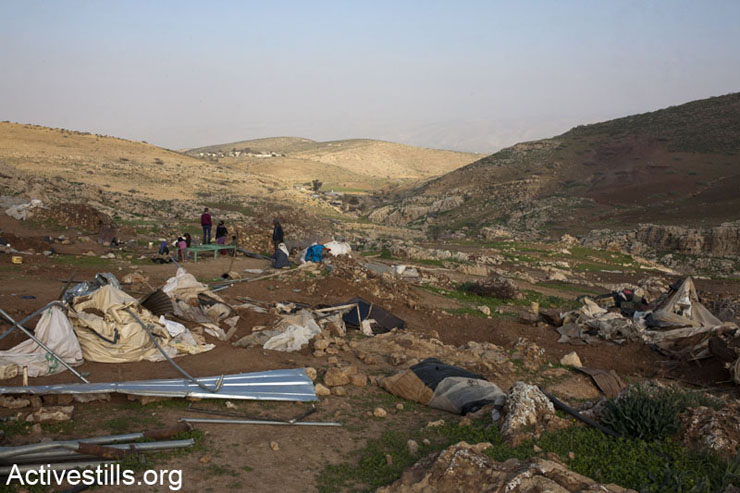
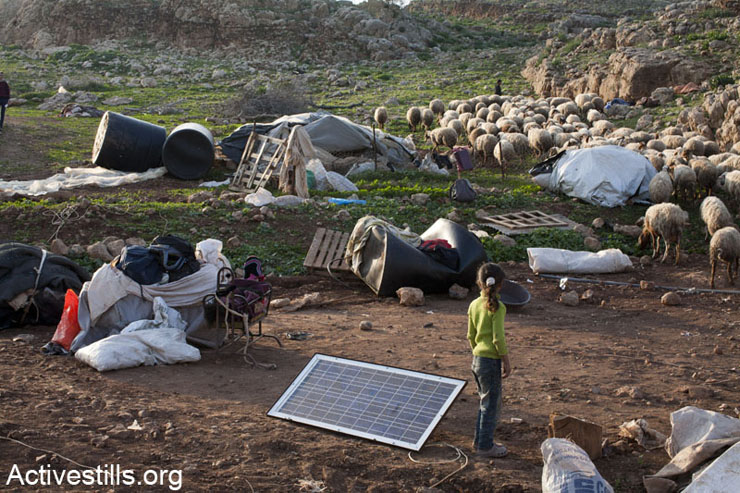
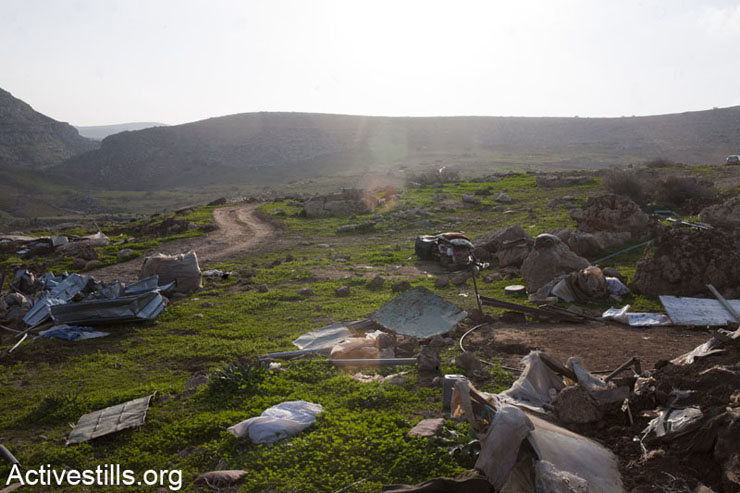
On January 17, the Israeli army destroyed 55 homes and animal shelters in the Al Maleh area. This large scale military operation happened simultaneously in two separate locations: Hamamat al-Maleh, and further up the valley in Al-Mayta. Al-Maleh and Al-Mayta are two marginalized villages located in the north of the Jordan Valley, near the Tayasir checkpoint.
Of the 55 buildings demolished, 23 were family homes: five in Hamamat Al-Maleh (leaving 37 people homeless) and 18 in Al-Mayta (leaving 150 people homeless). In addition, 33 other buildings used to shelter the communities’ animals were destroyed, as well as some water tanks. Two days later, on January 19, the entire village had been declared a Closed Military Zone and the Israeli army confiscated the community’s possessions, including food, bedding and tents that had been provided to the families by the Red Cross after the demolitions. However, the residents stayed and slept out in the fields with no shelter.
Both Al-Maleh and Al-Mayta, like many villages in Area C, have suffered a continuous pattern of harassment by the Israeli army. They have been subject to repeated demolition orders and only two weeks ago were forced to leave their homes for one night, purportedly due to Israeli military training.
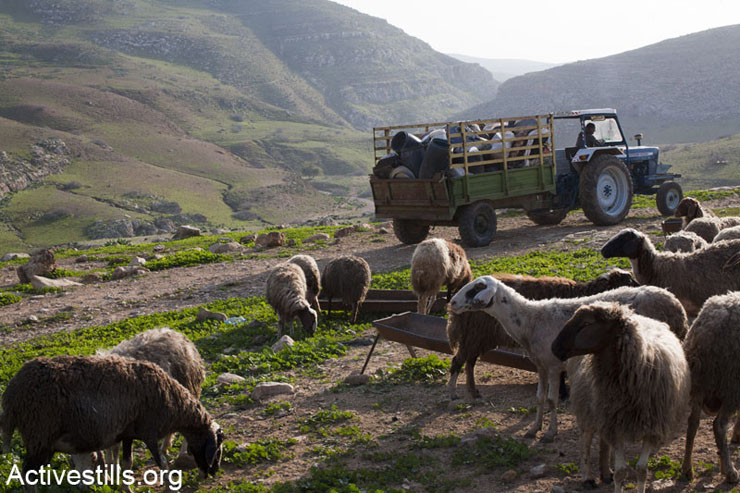
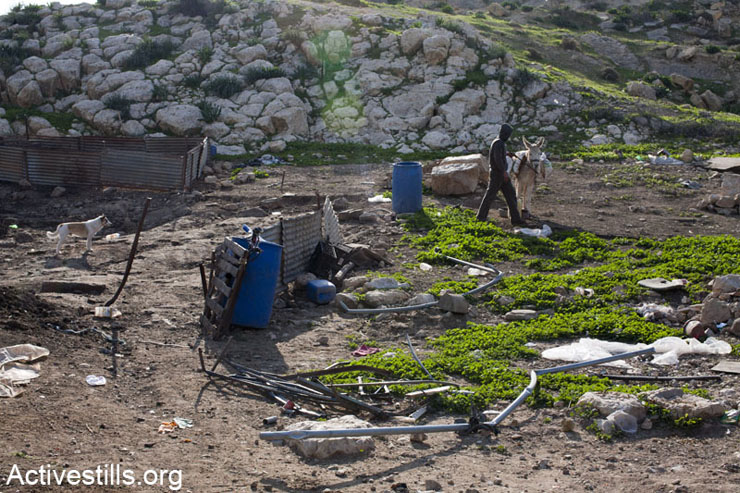
Member of Sariya family transporting his family belongings after the demolition of the family house in the village of Al-Mayta.

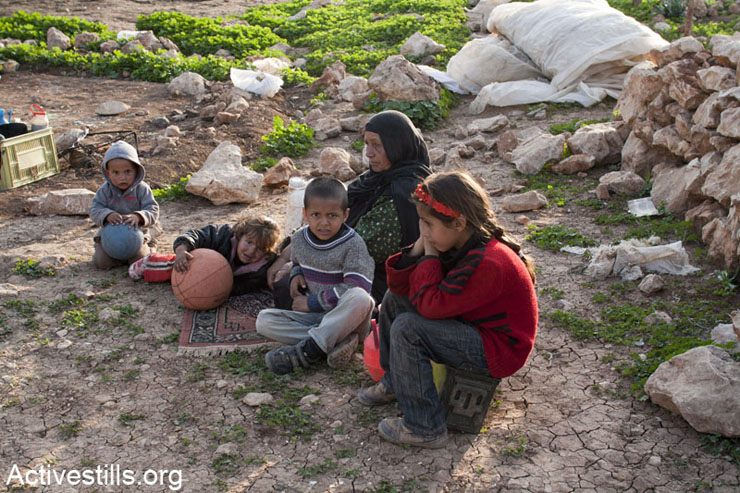
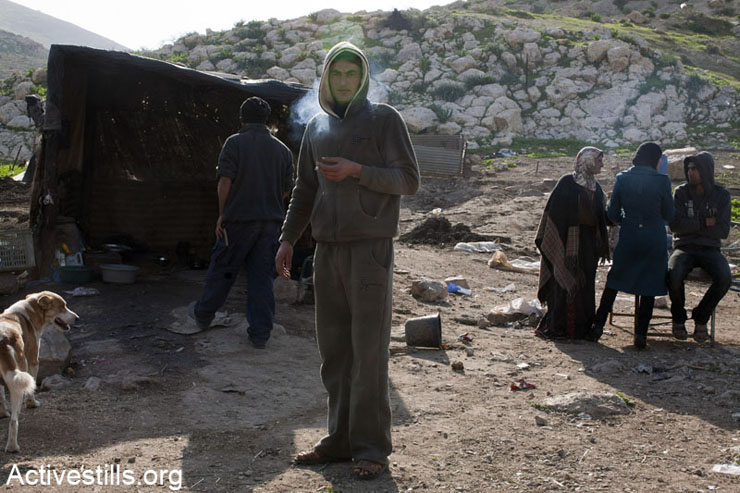
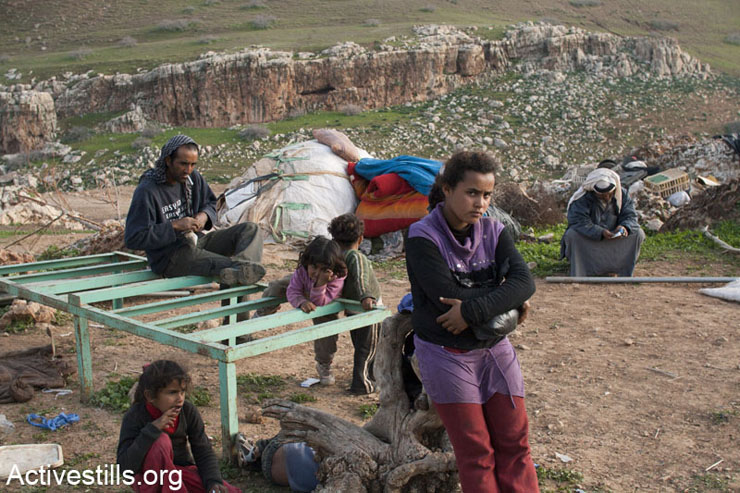
A woman and children from Nijada family sitting outside their demolished house in the village of Al-Mayta.

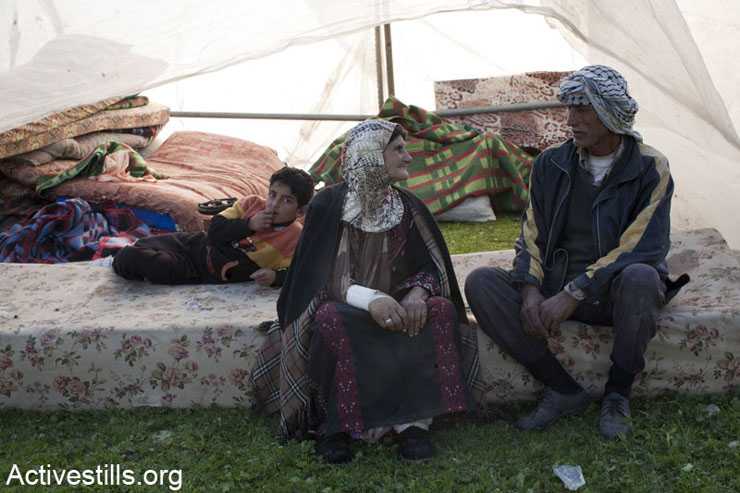
Nadira and Kasem Darajma sitting next to their family belonging in the village of Hamamat al-Maleh. Nadira’s hand was injured during the demolition, after an iron column from a tent that had been demolished by a bulldozer fell on her.
For additional original analysis and breaking news, visit +972 Magazine's Facebook page or follow us on Twitter. Our newsletter features a comprehensive round-up of the week's events. Sign up here.


Greg Pollock
“…the entire village had been declared a Closed Military Zone and the Israeli army confiscated the community’s possessions, including food, bedding and tents that had been provided to the families by the Red Cross after the demolitions.” : The confiscations are a denial of humanity, treating people as cattle which must be cleared for the land’s use by others.
Even if the State MUST have this land, it could relocate these prior residents in dignity. This is about cheap removal through exposure and deprivation, to save the State money. The issue is not State necessity but cheap disposal.
Rauna
The government of the only democracy in the ME should be ashamed of this action and I hope this doesn’t have anything to do with the teaching of judaism.
Leaving people to face their slow and painful death is also a crime.
The Trespasser
>The government of the only democracy in the ME should be ashamed of this action
Oh, it’s fine really. It’s Middle East after all, not Switzerland.
>and I hope this doesn’t have anything to do with the teaching of Judaism.
Clearly, it does not.
>Leaving people to face their slow and painful death is also a crime.
Who is going to face “slow and painful death”?
directrob
You could for once write that, from a purely humanitarian point of view, it is scandalous how Israel handles these people.
The Trespasser
You still haven’t listed the infringed human rights of Israeli Arabs.
>from a purely humanitarian point of view, it is scandalous how Israel handles these people.
Being accustomed with Bedouin ways of living I can say that for them such eviction is much less of a “humanitarian disaster” than it might seem to Westerner accustomed to wholly different principles.
Bedouins erect their camps – not villages by any standard – where their sheep can find good graze.
There are hundreds of such camps, spread throughout WB and Negev, but it does not mean that a modern democratic state should or must allow nomadic tribes to live wherever they please.
directrob
See:
http://972mag.com/resource-the-state-of-human-rights-in-israel-and-the-occupied-territories-2012/64096/
That nomads cannot be allowed to live wherever they please does not mean the state can remove them wherever and whenever they please. In the Negev that would be against human rights, in the West Bank it would be against international law.