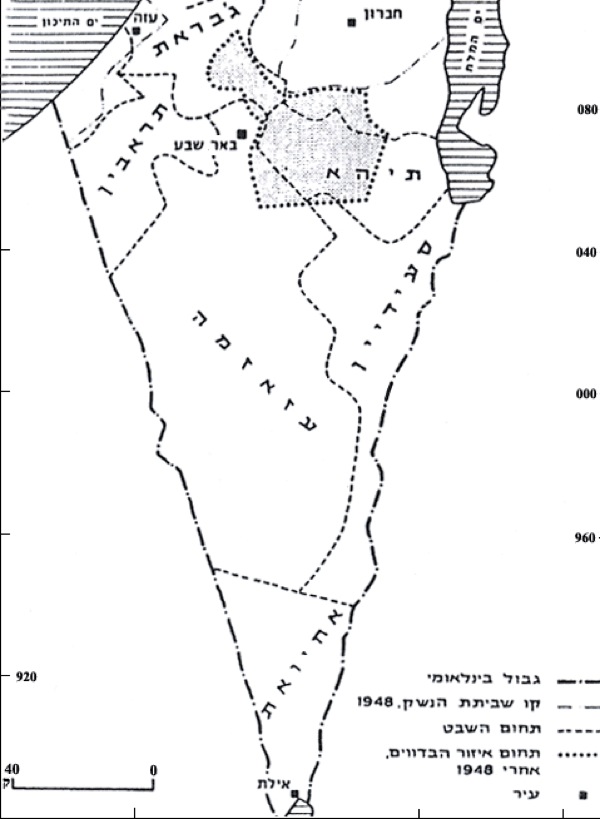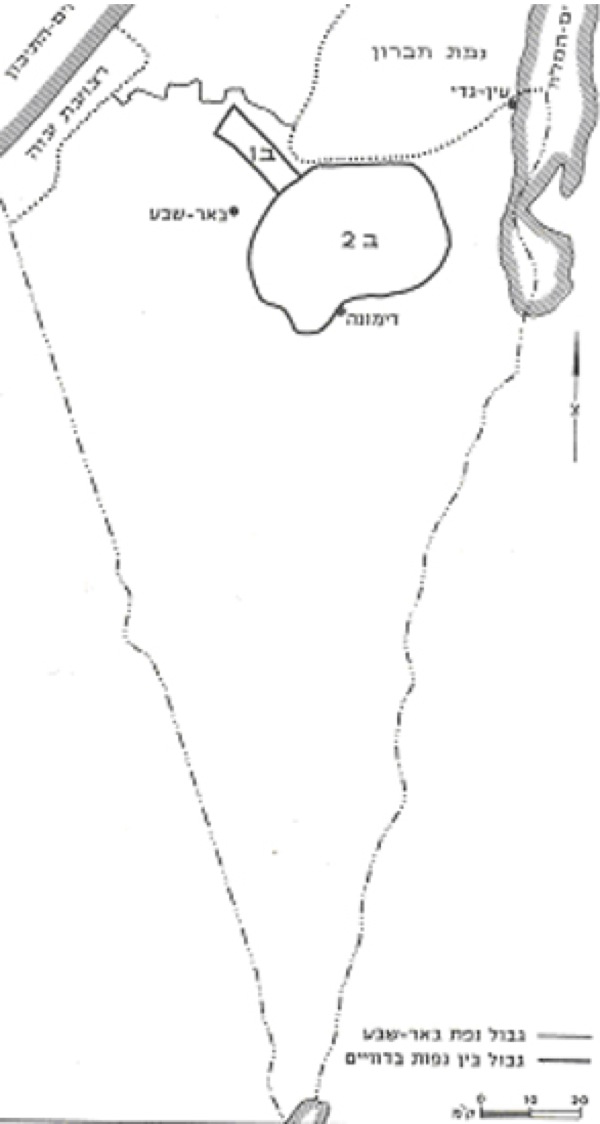
26 comments for ”Forced relocation of 30K Bedouin biggest dispossession since ’48“

    
  1. Well, the mass expulsion and dispossession of Jews in 2005 from Gush Katif passed off without a hitch, so why can’t this one, too?

  2. 
  3. Because those Jews in Gush Katif – many of them recent immigrants from the US just as Ben Israel – were illegal squatters in the first place whereas these bedouins are the natives from time immemorial.

    Ben Israel aka ‘I_like_Ike_52′ of course knows that, but in his megalomaniac ethnic supremacist navel gazing, he thinks if a Jew has set foot somewhere – even for a day – that land becomes his for eternity.

    It’s written in some old book full of other ethnocentric fairytales that Ben Israel think is The Truth on no matter what subject, even global heating …

  4. 
  5. This is a blatant human rights violation which, unlike other controversial actions by the Israeli government, has not rationale based in security or even “heritage” issues. Many of the Bedouin do not identify as Palestinian and many others of them served in the Israeli army. The point being that if this plan is implemented, they will all be Palestinians for their treatment at the hand of Israel will be the same.
    Gush Kutif was a place which could only be maintained artificially by Israel using its army, its power grid, and its other infrastructural instruments. The situation here is entirely different for here, the Bedouin are “there” in their unrecognized villages without any of that, even though they deserve it. No one would remain in Gush Katif without the protection and aid or Israel and as we now know, they didn’t.

  6. 
  7. This is an extremely complex topic and the black/white depiction given here doesn’t do it justice. You may not be pleased with the government’s attempt to resolve a long-standing problem, but maybe you can make an effort to explain how they came to the solution they’ve prescribed instead of attempting to make it some sort of massive land grab?

    Let me help you a little. What do you do with a nomadic lifestyle in the 21st Century? What do you do about land in general in a place where the population has increased by several multiples over a few decades? What do you do in most countries to ensure proper development of populated areas? What do you do in most countries when centers of population, particularly sparse ones do not fall into regional or national planning of infrastructure or towns?

    Surely there is room here for plenty of discussion that doesn’t use the screaming superlatives of dispossession.

    And while you’re explaining the complexity, could you also tell us what you propose as the solution? For example, do you think that every “village” should be recognized? If so, then what will happen in 20 years when a bunch of new “villages” are created nearby. Will you recognize those as well or claim that if they aren’t recognized, that it is dispossession of land?

    Thanks.

  8. 
  9. Another question came to mind. How much territory are we discussing here and how many people are affected? One of the reasons this matters is population density. Arabs in Israel tend to build out, not up. Within their homes, they might add floors or rooms, as their household grows (including young marrieds), which leads to quite a bit of sprawl in some areas. Is this true of the Bedouin? How much land per capita are they going to have if this plan goes into effect successfully? How much do they have now per capita? How do these numbers compare to Israeli Jews and Arabs in other parts of Israel? Not just Tel Aviv, but what about the Galilee, for example?

  10. 
  11. The “progressives” enthusiastically suspported the uprooting and dispossession of the Jews of Gush Katif..If what is being proposed to do wit the Beduin is indeed the same thing, the “progressives” will find that it gets easier and easier, and since that is what they are proposing to do with the rest of the Jews in Judea/Samaria, it might be a good idea to try out various techniques on the Beduin….get in some practice with 30,000 Beduin before the main event with 300,000 Jews.

  12. 
  13. Are you sure the Naksa in 1967 didn’t expel more Palestinians? I’ve seen various figures, but they’re all in the hundreds of thousands.

  14. 
  15. “This is an extremely complex topic”
    .
    I will try to translate: “You Bedouin are in our way, we will take all your land for us and you will get probably nothing in return”

  16. 
  17. Actually, Directrob, Israel built 7 cities for the Bedouin and this new plan was an attempt at finding further compromise because a large percentage of the Bedouin did not wish to live within those cities. The author of this piece seems very knowledgeable about this issue from a negative perspective but it has a number of angles that need to be considered. The questions I asked were relevant and need to be discussed. Let me know next time people in your country can just decide to build a village anywhere they like.

  18. 
  19. To Ben Israel and Historian: The only problem is that their villages are unrecognized and therefore, are not connected to the power grid or the Israeli water system and do not receive other services from the Israeli government like local schools. These problems can be resolved easily: recognize the villages and given them their needed, and entitled to government services.
    The Bedouin of the Negev are no longer nomads. Virtually all of them are settled. Nevertheless, they follow Bedouin customs and traditions. They are no threat to the State and many of them, at least until very recently, were proud to serve in the Israeli army as trackers which the specialized tracking skills of their culture played a role in protected the boarders and Israel’s security from land infiltrators.
    To those who say, Israel has built towns to which they can be resettled, I say, I have been in one of those towns, Tel Sheva, and I can tell you that the conditions in it, are far inferior to the unrecognized towns which I have visited. They are crowded, they lack government services, and they are poor in an oppressive urban sense. Just why anyone would think that that would be a better place to live for them, seems strange to me.
    The true reason for the destruction of their towns and the lack-of-recognition of their villages is that many of them are on prime locations on which planners would like to build Jewish towns. So, to do that, the people have to be removed, in a way which was similar to the removal of the Indians in the USA as the need for land for farming increased.
    Unlike other controversial Israeli actions, there is no security issue here, and if there is no security issue, wouldn’t it be far easier and less problematic to just leave the Bedouin where they are and integrate them into the system where they are already dwelling?
    Sometimes something can be simple, why make it complex?

  20. 
  21. Well, where I live in the USA, you can’t just “claim” a piece of land, even if you are certain your ancestors lived there. You also can’t form a new town without the approval of the county or the state. You simply can’t. When you decide to establish a new town or residence or even build a hotel, hostel, residence or a restaurant or place of business, you need to get approval from authorities. Usually this involves numerous licenses, meetings with town planners, meeting with overseers of town planning on behalf of the city, county or state, infrastructure planning meetings, involvement of lawyers, and lots more.

    In fact, I can’t even renovate my own home, for which I paid and have a deed of trust, without getting a license and approval from my city that requires that I abide by city, county, state and federal laws.

    So forgive my simplistic outlook on what it means when the Bedouin and their supporters say, “This is all ours and has been since Ottoman days, and we’ll build where we want and how we want and if you, Israel, don’t agree, you are infringing on our rights, stealing our land and acting like racists.”

    I support the Bedouin, do appreciate that many have been partners with Israel in its security and believe that Israel should come up with a solution to this problem that gives them an honorable feeling. I still haven’t been told why this proposal by Israel doesn’t achieve those benchmarks. I asked the author of this piece some fairly straightforward questions. What’s the problem in providing answers?

    It is obvious that both Israel and the Bedouin are going to have to compromise here. It would be extremely unwise and even unjust for Israel can turn this minority into enemies. It is also impossible that the Bedouin think they can simply build and settle wherever they want. Your comments about hooking up to the grid explain why – you simply can’t extend services to every village just because somebody wants you to. It’s expensive and not very efficient. You also need taxes to enable these villages to grow, and as can be seen in many existing Arab towns and villages today, taxes are not easily raised and very often the towns suffer as a consequence.

    Oh, and if you really want to compare the Bedouin to the Indians and the Israelis to Americans, a comparison I reject and abhor, you will find that most Indians in the USA today live inside reservations whose lands are the result of treaties with the government and who may not expand beyond the borders of those reservations. Within those reservations, they may build but they may not build in such a way that violates state laws.

  22. 
  23. Mr. Historian. That is how the land was taken from the American Indians. They said, “we have always been here, it is ours,” and the Europeans said, “where is your registration? or your deeds of property…” and they had no idea what that meant, because this sort of legalized registration of property did not exist. The Europeans imposed their system, and took the land for their farms and enforced it using their superior military technology. This is exactly the approach of Israel towards the Bedouin. If you can explain to me the distinction, I am open to an alternative interpretation. The Indians were given a similar choice. Either “compromise” or be relocated. Those who compromised kept some of their land, but later, the Europeans took it all anyway. Those who were moved to reservations, well, we know how well that worked out for them.
    I don’t see why there is a problem that needs to be resolved other than the recognition of these towns. About what do the Bedouin need to compromise? Recognizing these towns as legitimate municipalities would be far easier than moving 30,000 people to new environs. Mr. Historian, would you care to explain what the problem is and why the Bedouin need to be removed from their existing lands of residence? The only reason is to take it and to build new Jewish or Hebrew towns on it? Am I missing something? Please explain.

    Mr. Historian, you need to visit Rahat and Tel Sheva and see the conditions of life there, and then you would understand that this is not a solution at all.

  24. 
  25. Well, firstly, I reject the comparison between the “natives” and the colonialists. I don’t have the patience to repeat why so soon after I’ve written why elsewhere on this site. Let’s just shorten it to: you’re not going to deny 3000 years of Jewish history.

    Second, this is not the 18th Century or the 19th Century. This is the 21st Century. Populations are much bigger, technology is way different and I don’t just mean military technology.

    Third, any country, province, state and county considers the land they have available, how that land will be used, which areas are for communities and which areas are to be preserved as natural areas, which areas are to be harvested for natural or other resources, which areas are to be tapped into the grid, how close communities may be one to the other, which roads need to be built to enable efficiencies, not to mention services such as fire and medical, etc. It’s endless, and your comparison with the American Indian which already falls flat when it comes to the Israelis and the Bedouin, becomes moot when you consider that this isn’t 200 years ago in the American West. This is a tiny, modern country that holds 5 times its population from 60 years ago, 7 times if you include Gaza, Judea and Samaria.

    Fourth, if you recognize every village that wants to be recognized, you retroactively and currently permit abuse of law and of the state’s authority. If you do it now, you have to do it again and again because this will continue to happen and you’ve established a precedent. As I ask above, what happens in 20 years when you have another 30 villages to approve? Besides, what happens when those villages begin to infringe and encroach on property or resources used by current villages or towns? Even illegal ones.

    Fifth, as far as I know, there is no rush to establish new “Jewish or Hebrew” towns in the Negev. They have had some luck enlarging Be’er Sheva, but that’s about it. It’s not that easy from an economic standpoint, if you can stand the heat, to live down there and most Israelis have indicated their preference for living closer to the center of the country. I doubt that your contention that this is some sort of land grab to replace the Bedouin with Jews is right. But it sure makes this all seem very evil.

    Sixth, I’ve been to Rahat. My take on it is that life would be vastly superior if the government could expend resources there instead of spreading them all over numerous enclaves covering a much larger area. It also seems to me that the south of Israel is a hard place to make a living for both Arabs and Jews and the Bedouin have a problem in that their traditional way of life does not make it easy to make a reasonable living inside a modernized society. Also, they are among the more poorly educated sectors in Israeli society and partly because they’ve maintained their traditional way of life tend to suffer from a higher infant mortality rates and more issues related to genetic and other diseases. Precisely because the Israelis tend to be open to other cultures’ traditions, the Bedouin have maintained some customs within their societies that limit their potential to come out of this difficult situation.

    What you’re proposing will actually cause further deterioration and not improvement. Do you see the irony? For example, consider the advantage of having a town with the bulk of the population living there which is able to efficiently provide schools, a hospital or two, water supply, electricity, economic centers of activity such as factories or shops and supermarkets and compare that to your proposal that everything should be spread out over large distances so that you can’t really offer any of these services. Are you helping or hurting Bedouin children who require an education?

    I think you and your compatriots may believe that you are doing right by the Bedouin, but I suspect that if you succeed in your quest to grandfather all these illegal living areas, you will actually be doing the Bedouin a disservice. Then again, I guess you’ll then be able to keep attacking Israel. Next it will be about how Israel is racist because the Bedouin don’t receive the same benefits as Jews who live inside planned towns.

  26. 
  27. “Historian”: Let’s just shorten it to: you’re not going to deny 3000 years of Jewish history.

    Second, this is not the 18th Century or the 19th Century. This is the 21st Century.

    Aha, so I should accept 3000 years of Jewish history in the Negev (???) and deny 18th and 19th century history of the Negev. I think that even mythological maps do not show Jews in Negev, so I do not know what is there to accept or deny. 19-th century maps on the other hand do exists, and documents etc. The disconnect reeks racism.

    About other points, “planning” is normally conducted with the cooperation and consultation of the affected people, while post-factum legalization of settlements was done before and IS PLANNED for Jewish settlements.

    And we will improve their primitive customs! And Haredi customs, as we are at it.

  28. 
  29. Historian: There is a plan to build a Jewish/Hebrew town on the site of one of these unrecognized villages, see: http://www.haaretz.com/print-edition/news/jewish-town-to-be-built-on-bedouin-land-under-negev-relocation-plan-1.365666
    The problem in Rahat is discrimination, pure and simple, Rahat could be as nice as any of the development towns if the state allocated equal resources to it as it does to the Jewish/Hebrew towns. No one asks why there is a separate Dimona, a Netivot, and a Sderot. Why not force the Jewish residents of all three of these towns into one town, Dimona, for example, so that the state’s resources can be more efficiently allocated to the Jewish population? That is the analogy.

  30. 
  31. Piotr, as the Haaretz article quoted by Arth shows, planning was done in consultation with the affected peoples. The story outlines how a certain tribe approached the IDF asking for land in 1956 and received 7000 dunams.

    Regarding the maps, I know you would like to give the entire Negev to the Bedouin because Ottoman maps show they were there in the 18th and 19th Century. I’d like to have my grandfather’s home that sits in an Arab country and that I’ll never see. His family had to move to Israel and you know where they lived? Right there in the area we’re discussing. They worked hard, adjusted their lives and fought in wars of survival. The way to work this out is to find a compromise that works for everybody.

    Regarding primitive customs, those are your words not mine. I referred to the fact that their traditions, traditional ways of making a living and education make it challenging for them in this era of technology. I also noted that Israel is understanding and respectful of their customs. Tell me what country you live in and we can discuss how your country relates to its minorities. For example, does your country favor multiple wives or consanguineous marriages?

    Arth, “In November, Haaretz reported that the Prime Minister’s Office had prevented Atir and Umm al-Hiran from being recognized as legal townships, contrary to the recommendations of a professional committee of the National Planning and Building Council. The residents have appealed their eviction orders, and some appeals have already reached the Supreme Court.

    Meanwhile, a plan to construct a new Jewish community, to be called Hiran, has been submitted to the regional planning and building committee, which has already heard the Bedouin residents’ objections. The Interior Ministry told Haaretz a detailed plan for the first neighborhood of Hiran is already being discussed. ”

    If it happens, then it is inexcusable. Let’s hope the Court prevents it from happening. On the positive side, there was a professional committee which recommended otherwise and there are the courts which will review the matter in detail.

    Dimona, Netivot and Sderot are exactly my point. How much space do they take up relative to population? Were they legally built or not? How do they fare in terms of taxes paid? In Israel, the local tax (arnona) is what keeps towns going, not a federal tax. Rahat is one of seven towns that were built for the Bedouin, just as you have several towns for Jews there. I fail to see the difference other than that they keep building villages without government approval and you want them all to be accepted and treated like any other town. You still haven’t explained how any government can abide by such moves in the short run or in the long term. Just answer the simple question: are you going to grandfather all the new illegal villages/towns that will be built in the next 20 years as well? How will you deal with those that infringe on the original illegal ones?

  32. 
  33. footnote 11 seemed a bit weird – did you mean to say the Indian rule in Kashmir and the Chinese rule in Tibet?

  34. 
  35. First, the maps are important because the Beduin claims, however illegal (and the law is curiously plastic in Israel), have historical basis. In the same time, Jewish occupancy of that area in the last 3000 years is not well documented, archaeologists found something further north, Bible says something about Wilderness of Zin, which suggest that during Israeli Iron Age this area was occupied by nomads.

    Secondly, it appears that Beduins were indeed consulted, plans drawn in consultation, thrown into a wastebasket, and new plans were drawn which are much less to Beduin liking. The process stinks, Beduins are unhappy and this makes certain elements of the ruling coalition more happy.

    Third, good to know about arnona. This means that by carefully designing a wholly poor community we can assure a miserable level of services for generation, unless political patronage, which minorities do not possess, will secure some extra allocations to that community.

  36. 
  37. You are right, expelling people from their land, to build a new “Jewish” town on it, as reported in the article which I sent you is, inexcusable but this is exactly what the government of Israel is doing and is exactly the ultimate goal of all of this relocation. Reduce the space in which they are allowed to live to open the lands for living by other people. That is what it is about and the rest, self-serving rationalization.

  38. 
  39. Piotr, what you should be taking away from the arnona business is that very often when you hear that Arabs in Israel are second class citizens because they don’t receive the same resources as Jews, it is due to problems in collecting taxes in many Arab Israeli towns. I know that’s not what you’re angling for, but it’s a fact.

    Second, I brought up the 3000 years to refute the charge of colonialist and native as depicted by Arth. I don’t use that history as a benchmark for which areas should be under Israeli control or I’d be angling for Western Jordan and refusing any peace deal that includes Judea and Samaria. Since I have no designs on Jordan and agree with Israel’s peace offers over the past decade, it should be evident to you that I am not under the impression that 3000 or 2000 years ago should determine borders or living areas.

    Third, yes, it appears from the discussions with the Bedouin that the government was unable to get them to agree to give up some of their illegal villages. So then by definition any changes in territory imply that the plans “were thrown into a wastebasket.” I’m less worried about that than I am about the professional committee’s recommendations being thrown in the wastebasket.

    Fourth, if the professional committee’s recommendations were thrown away for political considerations, that is a shame, although it is legal. Obviously, it is preferable to listen to the experts when making decisions.

    Fifth, what is unclear to me, and this is also in response to Arth’s comment, is what this new town’s planning actually means. This goes back to some of the questions I ask the author of this piece above. For example, is this Jewish town the only new Jewish town being planned in this area? How many people is it supposed to service? How many illegal Bedouin villages have been accepted and how many closed down? Did the government offer new land to the Bedouin?

    In the vein of what I was saying earlier, a government has the right to plan communities and the development of regions. There will always be questions as to why decisions are made and sometimes they will be political, sometimes they will be illegal, sometimes they will be under the table and sometimes they will be legal, considerate, fair and along the lines of good long-term planning. As the Haaretz article indicated, in the case of this new “Jewish” town, it appears there are already court challenges in place, so we should eventually get out answers.

  40. 
  41. * our answers

  42. 
  43. After two planes crashed above Switzerland in 2002 killing 71 the Swiss company responsible for traffic control (and for the crash) decided to do some damage control and put “some questions that should be asked” about the actions of the Russian pilots on their web site.
    .
    Historian your effort for damage control is not much better. What happens in the Negev weakens the morality of the Israeli state. A wise Israeli government would do the right thing and support the villages.
    .
    http://bedouinjewishjustice.blogspot.com/2011/03/el-araqib-destroyed-for-21st-time-jnf.html

  44. 
  45. My effort at “damage control” is not an effort at damage control. I reject the premise of this article and its many supporters. I think a government has the right to dictate where it uses its resources and how it uses them; where land for communities should be allocated and where it shouldn’t be. Just as I support the removal of any Jewish settlement or community that has been built without government approval, I reject that the Bedouin can do as they like. Nobody here seems to be able to answer the simple question about what happens in 20 years when you’ve got a bunch more illegal Bedouin communities, some of which might encroach on legal or illegal ones. Nobody here seems to be able to explain to me how Bedouin kids are supposed to be educated when you can only build a limited number of schools for this size population. Nobody here seems to be able to explain to me where the money will come from to hook up these new towns and villages to the grid, to basic 21st Century amenities like sewage, running water and electricity. Who will pave roads? Who will ensure that firefighters and medical services can get to these places quickly and safely?

    It’s not damage control, it’s simple logic and it’s a knowledge of how things are done in more established countries like the USA. Like in everything else in this conflict, both sides need to compromise and those of you who are siding with the Bedouin may think you are helping them, but in fact you are creating problems for them that will ensure they remain poor, without many government services and always uncertain whether somebody will LEGALLY come by and destroy their home.

  46. 
  47. Historian,
    Good technique using compassion for the well being of children…
    .
    “Nobody here seems to be able to explain to me where the money will come from to hook up these new towns and villages to the grid”
    .
    The government could use the 5,000,000,000 dollar a year they use to continue the West Bank and Gaza occupation. Actually the government could just use the money now used to support new and expand old settlements in the West Bank.

  48. 
  49. They could, and if you would like that to happen, you can move to Israel, run for office and when your party wins and rules the coalition, you can ensure that government money is spent in this way.

    PS Gaza is not occupied. Gaza has been entirely vacated by Israel. Also, if your $5 billion estimate includes any part of Jerusalem, just remember that the old part occupied by Jordan for 19 years was annexed by Israel.

  50. 
  51. It has been over 14 days and there is still no answer to the questions that Historian asked the author. After reading these comments I am curious of what the answers will be. Particularly to this:

    “And while you’re explaining the complexity, could you also tell us what you propose as the solution? For example, do you think that every “village” should be recognized? If so, then what will happen in 20 years when a bunch of new “villages” are created nearby. Will you recognize those as well or claim that if they aren’t recognized, that it is dispossession of land?”

    Historian is correct in suggesting that if a “village” is recognized there needs to be consistency in that decision for other future “villages.” The hypotheticals he/she proposed are very real possibilities.

    Author Eyal Clyne- please answer!


Leave a comment