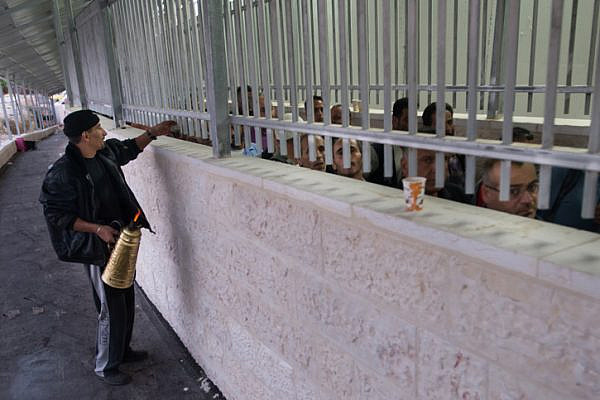
As Israelis march today to celebrate the ‘reunification’ of Jerusalem, Palestinian East Jerusalemites struggle against skyrocketing rents and building restrictions to remain in municipal borders.
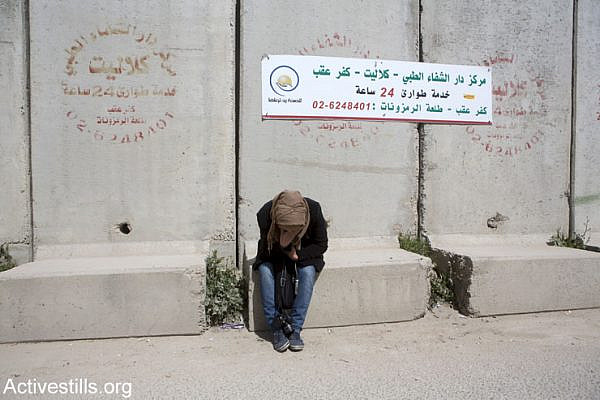
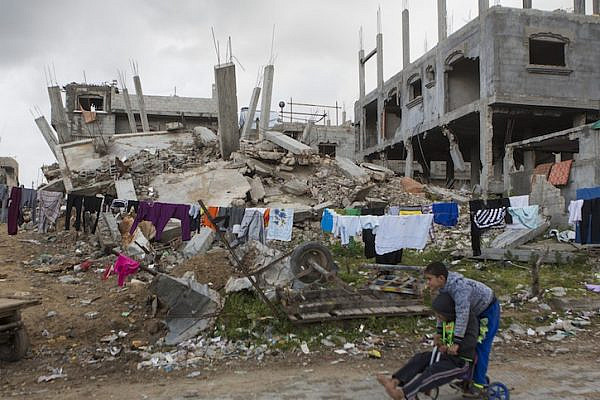
Every day, investors knock on the door of a small home in Kufr Aqab, a village on the Palestinian side of the separation wall but inside Jerusalem’s municipal borders. The tidy, one-story, two-room house is surrounded by new apartment buildings, some reaching nine stories high. Contractors are currently finishing more than 1,000 units in the area; billboard advertisements suggest many more are to come.
The same phenomenon is occurring in other Palestinian neighborhoods that are technically part of Jerusalem, but separated from the ancient city sites by the huge concrete wall.
Apartment buildings are popping up like mushrooms in these areas. The sound of construction fills the air.
Kufr Aqab – once full of open, green spaces – is now “crowded” and “dirty,” says Amira, an 18-year-old Palestinian woman who lives here. She asked not to be identified by her real name out of fear of endangering her Israeli-issued Jerusalem residency permit.
Residents pay taxes to the Jerusalem Municipality but receive far fewer services than the neighboring Jewish districts of Jerusalem. While Palestinians constitute approximately 35 percent of the city’s population, only eight to ten percent of the municipal budget is allocated to their communities. “We have to hire someone to come and take [the garbage] because the city won’t come,” Amira says. “They will pick up everything on the main street but not behind it.”
Refuse collection is a long-standing issue for Palestinian East Jerusalemites; even Israeli officials have raised concerns about the issue, and the influx of new residents means things will only get worse.
Numerous requests for comment from the Jerusalem Municipality for this article have been unsuccessful.
Unplanned growth has already stretched Kufr Aqab’s infrastructure to the point of breaking, Amira and other residents say. “What once was a spacious entrance into the neighborhood is now a small, rough, tight road that does not allow cars to pass through it. The entrance [has been narrowed] by two new buildings on each side that have taken space from the road to...
Read More