It’s not what the Jewish majority likes to believe.
A common Jewish Israeli criticism of Arab Knesset members is that they do a disservice to their constituents by focusing on high politics, mainly the Palestinian issue, instead of dealing with bread-and-butter economic issues that would really help them. (There may be something self-serving about this line of criticism, but who knows?) Last week I went to Jedeida-Makker, an Israeli Arab village a couple of miles inland from Acre, to hear Balad MK Haneen Zoabi give a campaign speech. The residents, including the local council head, indeed told her that she and her Arab colleagues in Knesset should concentrate more on the day-to-day problems of Arab citizens and less on the occupation. However, their complaints offered no vindication whatsoever to Israeli Jews who believe they know what’s best for the Arabs of this country, better than the Arabs do themselves.
The day-to-day, bread-and-butter economic problems the residents talked about all exemplified Israeli contempt for Arab rights. In other words, for Israeli Arabs, the issues they care most about are as highly political and uncomplimentary to Israel as can be.
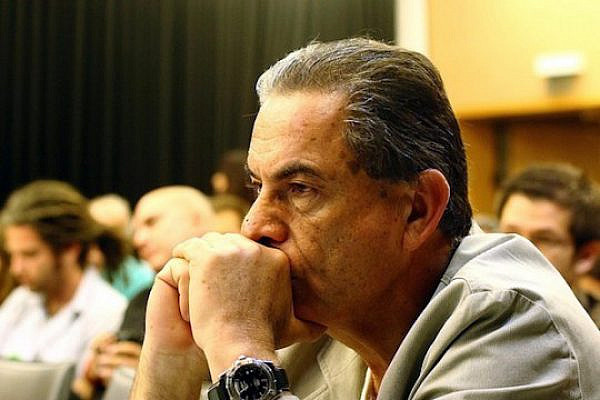
Before Zoabi’s speech to about 50 people in a Balad campaign office, a local party activist and former Jedeida-Makker deputy council head, Mohasen Kais, showed me a court order he’d gotten a few weeks before. It said he owed the Israel Lands Authority – the state – about $80,000 for nearly a half-century of unpaid land use fees, and that if he didn’t pay it within 30 days, it was up to him to demolish the house and vacate the land, otherwise the “rightful” owner, the ILA, would do the job at his expense.
Kais, 60, says he’s lived in the house since his father bought it in the mid-1960s; his family lives on the top floor now while his brother’s family lives below. The Kaises come from what used to be a nearby Palestinian village – Mohasen said its name was Qurqurdani – that was destroyed in the 1948 war. The family migrated to different villages, to Lebanon, and finally in the early 1950s to Jedeida-Makker.
“First they destroyed our villages, took our land and made us refugees, now they want to do it again,” he said.
About three-quarters of Jedeida-Makker’s 19,000 people are former refugees and their descendants. Dozens of local households have received court orders like the one that...
Read More